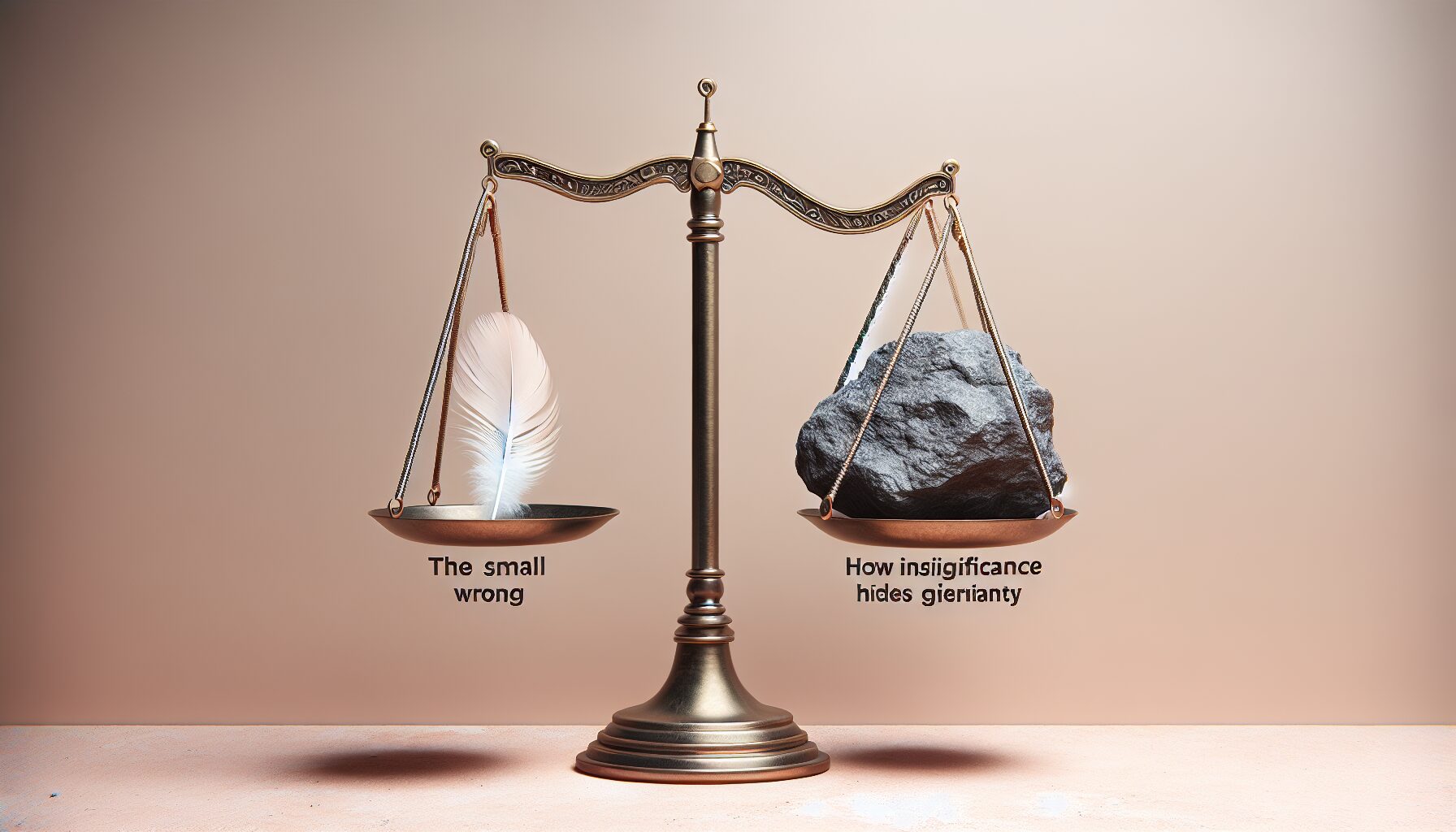
In everyday life, it’s not the monumental wrongdoings that often shape our ethical landscapes, but the smaller, seemingly insignificant decisions that piece together the moral compass of individuals and societies. The concept of the “small wrong” delves into how minor ethical lapses can often hide heavier moral implications, gradually eroding personal integrity and societal trust.
Understanding the Small Wrong
The small wrong, by definition, refers to actions or decisions that are perceived as minor infractions—like telling a white lie, slightly bending the truth, or taking something inconsequential that doesn’t belong to you. These actions, though seemingly harmless, mask deeper moral issues that often go unnoticed until they accumulate into something more significant.
Psychologist Daniel Kahneman, in his book Thinking, Fast and Slow, describes how people often rely on quick, intuitive judgments—also known as “heuristics”—which can lead to moral oversights. Individuals might justify a small wrong by considering it inconsequential, but this subconscious pardoning fosters a setting where larger violations can thrive unnoticed.
The Domino Effect: How Small Wrongs Accumulate
The phrase “it’s just a small infraction” lays the groundwork for a cascading effect akin to a domino fall. One minor wrongdoing, left unchecked, often emboldens individuals to commit further minor acts. For instance:
- A small lie to avoid embarrassment might lead to bigger lies to avoid more significant outcomes.
- Petty theft could evolve into a habit, tapping into larger-scale unethical behavior.
- Bending rules slightly at work can potentially unravel into ethical gray zones, complicating workplace dynamics.
“We habitually engage in small-scale moral compromises, dulling our ethical sensitivity to more serious issues,” writes Michael Josephson, an ethics expert and former law professor.
The Ethical Erosion: Societal Impact of Minor Wrongs
While individuals often perceive small wrongs as personal and contained, their cumulative effect can have a broader societal impact. A society’s moral fabric is stitched together by the actions of its individuals. Habituating to minor wrongs not only weakens personal ethical standards but also diminishes collective societal values.
Consider the implications of these behaviors in areas like business and governance:
- In business, the normalization of unethical practices such as minor accounting fraud or inflated expense accounts cumulatively can lead to corporate scandals, damaging reputations and livelihoods.
- In politics, when leaders justify small ethical lapses under the guise of pragmatic decision-making, it sets a detrimental precedent. As John Gardner once said, “Political life at the top is a fight for ethics.”
Cultivating Moral Awareness
The key to addressing the small wrong is cultivating a heightened sense of moral awareness and accountability. Educating individuals about the potential impact of their actions, however small, can foster a community of conscientious decision-makers. Here are some strategies:
- Ethics Training: Implementing comprehensive ethics training in schools and organizations can help individuals recognize and reflect on the impact of minor wrongs.
- Encouraging Reflection: Encouraging daily reflection and mindfulness practices can heighten self-awareness and support ethical decision-making.
- Promoting Open Dialogue: Fostering an environment that promotes open discussions about ethical dilemmas can help individuals feel comfortable confronting and rectifying minor wrongs.
“One of the deep secrets of life is that all that is really worth doing is what we do for others,” said Lewis Carroll. This maxim holds true in preserving both personal integrity and the moral health of society.
Conclusion: Embracing Ethical Integrity
The challenge of the small wrong lies in its dual nature of seeming trivial yet holding moral weight. By addressing and minimizing minor ethical lapses, individuals can significantly contribute to the cultivation of a more ethical society. Recognizing the moral gravity hidden within small wrongs enables individuals to consciously strive towards maintaining integrity, leading to a path where both personal and societal ethics flourish.
In the footprints of ancient wisdom, it’s crucial to remember: “With great power comes great responsibility.” Indeed, each small choice contributes to the moral strength—or weakness—of society as a whole.