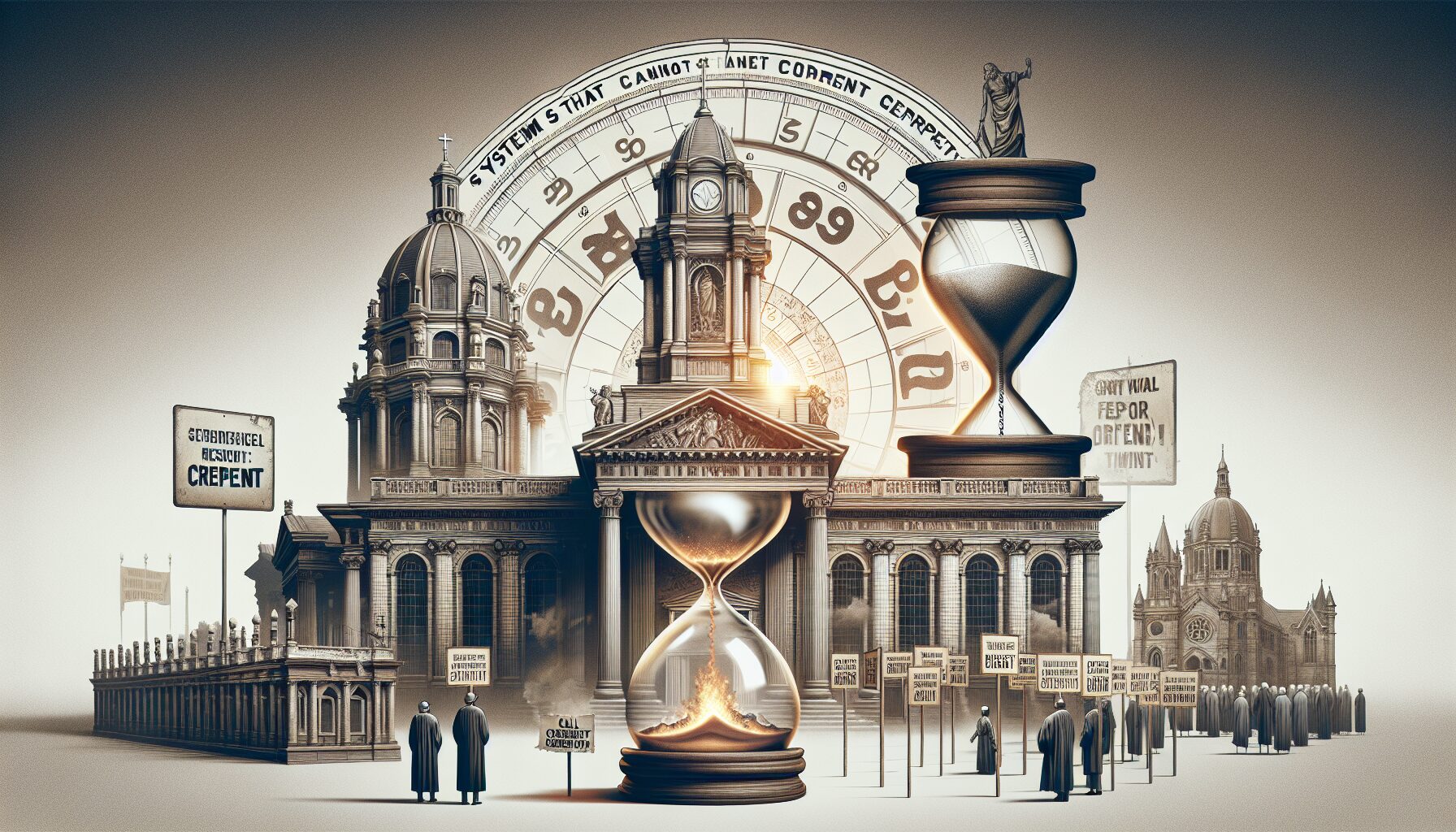
In a world where change is the only constant, spiritual institutions often stand as bastions of tradition and continuity. Their resilience and adherence to established doctrines can provide stability in times of turmoil and uncertainty. However, these same characteristics can sometimes render spiritual institutions resistant to correction, leaving them seemingly incapable of repentance. This begs the question: why do these systems struggle to embrace change?
Inherent Inflexibility in Doctrine
One of the primary reasons spiritual institutions resist correction lies in their foundational doctrines. Many religious teachings are rooted in ancient texts considered infallible by adherents. This permanence, while offering a clear guidance, also creates an inherent inflexibility. According to scholar Karen Armstrong, author of The Case for God, “Religions must strive, and usually with some success, to create a countercultural ideology that resists change.”
Institutional Power Dynamics
A significant barrier to repentance is the power structure within these institutions. Leadership often concentrates in the hands of a few, who may view change as a threat to their authority. The historian and theologian Diarmaid MacCulloch has noted, “Religious institutions, like all organizations, can develop a form of institutional conservatism where self-preservation becomes the main priority.” This status quo bias means admitting to past mistakes can be seen as undermining authority, thereby being fiercely resisted.
Fear of Divisive Consequences
Spiritual institutions also fear the divisive consequences of acknowledging and correcting past wrongs. Given that their communities are often bound tightly by shared beliefs, leaders may worry that admitting fault could fracture unity. This fear was echoed by Reza Aslan, a renowned religious scholar, in his book No god but God, where he explains, “For an institution whose authority is derived entirely from divine sanction, repentance can be seen as not merely admitting fault, but risking the very legitimacy of its existence.”
The Role of Continued Dialogue
In the face of these challenges, continued dialogue remains crucial for spiritual institutions to evolve meaningfully. Opening channels for discussion allows a safe space for communities to explore necessary changes without the immediate fear of upheaval. Facilitating these conversations can lead to gradual, considered corrections that may eventually lead to genuine repentance.
Ultimately, the resistance to correction within spiritual institutions is complex and multifaceted. While entrenched doctrines, power dynamics, and fear play significant roles, proactive dialogue remains a beacon of hope for these systems to embrace change while continuing to offer the stability they’ve provided to countless generations.